Astro
Astro Mini
Phantom Lite
D. G. Lockwood
Lantern
Nordic Cosmos
Nordic / Glitterlite
Princess
Telstar
Nordic De Luxe / Living Jewel
Nordic Table Lamp
Nordic Sconce
Traction Lamp
Astro

The Crestworth Astro Lava Lamp was made available in 1963 and it is the first lava lamp commercially released. It is the first lava lamp developed by Edward Craven Walker and continues to be a core product of the modern Mathmos lineup. It is the lamp that became a cultural icon in the UK.
The Astro underwent several slight iterations up to the modern-day Astro. For example, the original Astro featured a unique seal with a groove in the glass and little indentations in the cap that allowed the cap to screw into the glass. This was dropped in the very next iteration. As the Astro progressed through MK1-5 models it used a variety of base, cap, and bottle designs. One thing shared amongst almost every lava lamp produced by Mathmos since the Astro is that they all feature aluminum that is spun on a lathe. Depending on the model different finishes can be applied by painting, anodizing, or other processes. This process is still used today which is why Mathmos lamps are of much higher build quality than modern-day Chinese made lava lamps.

There are at least 8 known design variations of the Astro lamp and many more probably exist that are not documented here.
Astro Prototype or “MK0” 1963:
The first Astro features a 2 part base design made of copper anodized aluminum and enamel painted inside, the bottle is made out of crystal glass and uses a special seal on the bottle. There were several designs to affix the cap to the glass. One of them featured divots in the cap that screwed into grooves etched into the glass with the top of the glass just being cut off. The lava inside is always liquid and was meant to be filled in place.


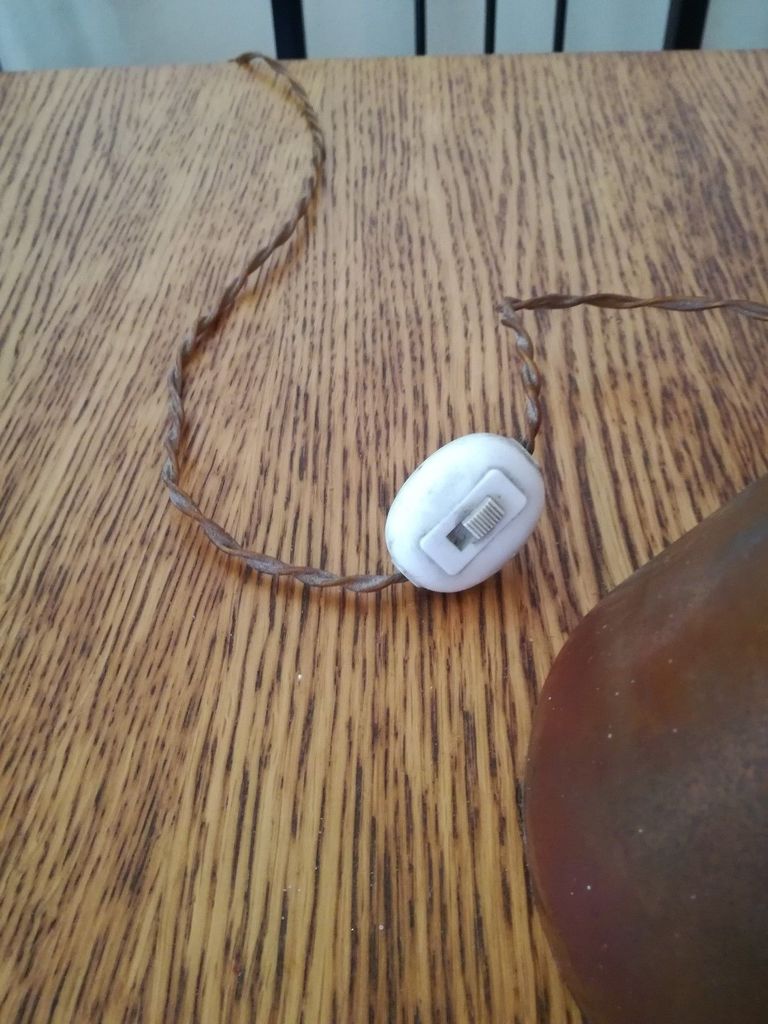
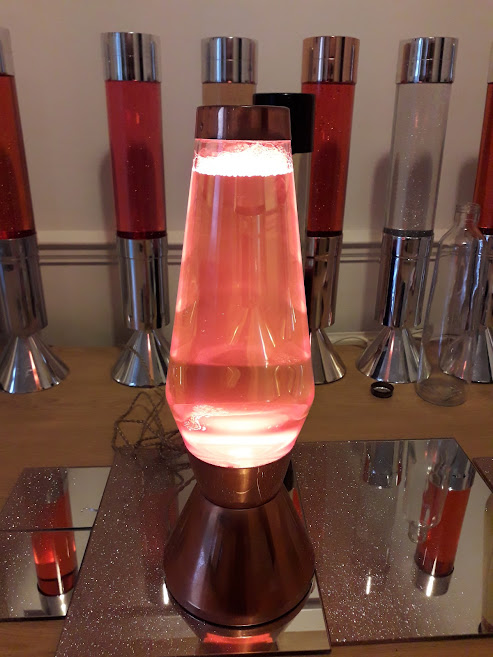


Some bottles are sealed by a expanding rubber o-ring that was squished between two plates. Others have a glass disc that was glued on.
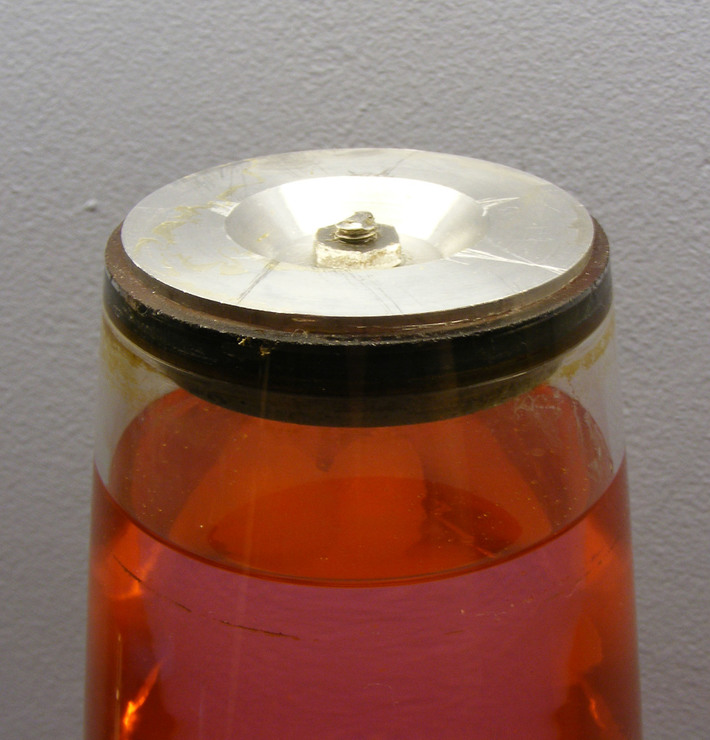
This is the model specified in the 1965 patent.

Early iterations side by side.

Astro MK1 1964-1965:
Features a 2 piece design with 2 cones and a brass-colored bulb holder.
Astro Mk2 1966-1967:
Still featuring a 2 piece base design, the bulb holder was changed to bakelite. An earth cable is fitted to the base and a black rubber base trim fitted around the bottom rim of the base.
Astro MK3 1968-1969:
Still using a 2 part base, but now a new base plate featuring 4 indented feet covered by green felt. 2 indentation lines around the upper cone were added.
Something to note in 1969 the “Electrical Appliances (Colour Code) Regulations” came into effect to all Crestworth lamps from this point forward were required to follow new codes requiring a bonded earth wire, brown for live, blue for neutral, and green and yellow for earth. This is helpful for identifying the age of Crestworth lamps of this era.
Astro MK4 early 1970’s:
Still using a 2 part base. The base was changed from 4 indentations to 5 feet under green felt. The cap was made larger and more similar to a modern Astro’s cap. The bottle features a new slimmer neck design and the bottle top is black bakelite that was used until the mid 1990s.
Astro Mk4.1 pre 1975:
This is the first base to be made in one complete part but for some reason still carried the 2 indentation lines around the upper cone, this version doesn’t turn up often.
Astro MK5 mid 1970s:
Similar to previous models but without the 2 indentation lines. Uses standard sizes for both the bottle and the bottle cap.
Modern Astro 1999:
The base plate was changed to the modern one with little nubby feet and in 2018 the bulb was changed from an E14 socket to a GU10 socket.
Differences in bottle tops
Bottle Necks

Bottle Necks went from a wider neck design in models 1-3 as seen in the left bottle in the above picture to a slimmer neck used in models 4-5 in the models after as seen in the bottle on the right.
Bottle Tops

The first 3 caps were used on models 1-3 and the 4th was used on models 4-5 and possibly model 3. All the way on the right is an Astro Lantern cap filler which is used to fill the space between the decorative lantern top and the bottle cap.
Copper Anodized Caps
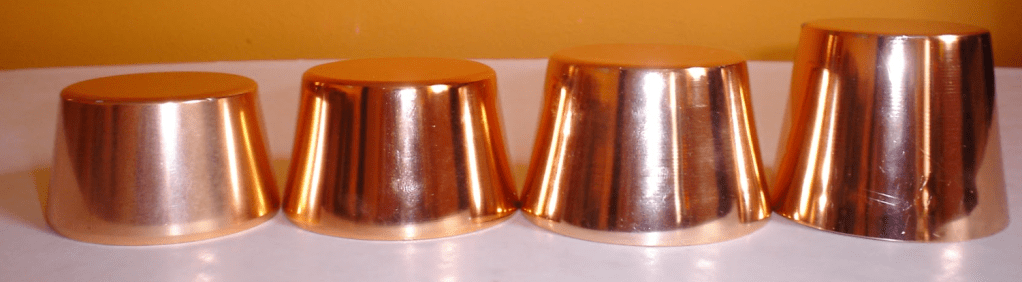
The first 3 tops on the left were used on models 1-3, with the metal top being the earliest used on wider-necked bottles. The 4th was used on models 4-5 and onwards for slim-necked bottles. However, this top can also be found on some third-design base/cap Astro variations.
Lava Lite Inspiration:

The Century by Lava Lite was directly inspired by the Astro. It featured a very similar bottle and base design. There are several differences though. The Century has added pinholes in the base for that mid century modern feel and has brass finish applied to the metal.
Astro Mini

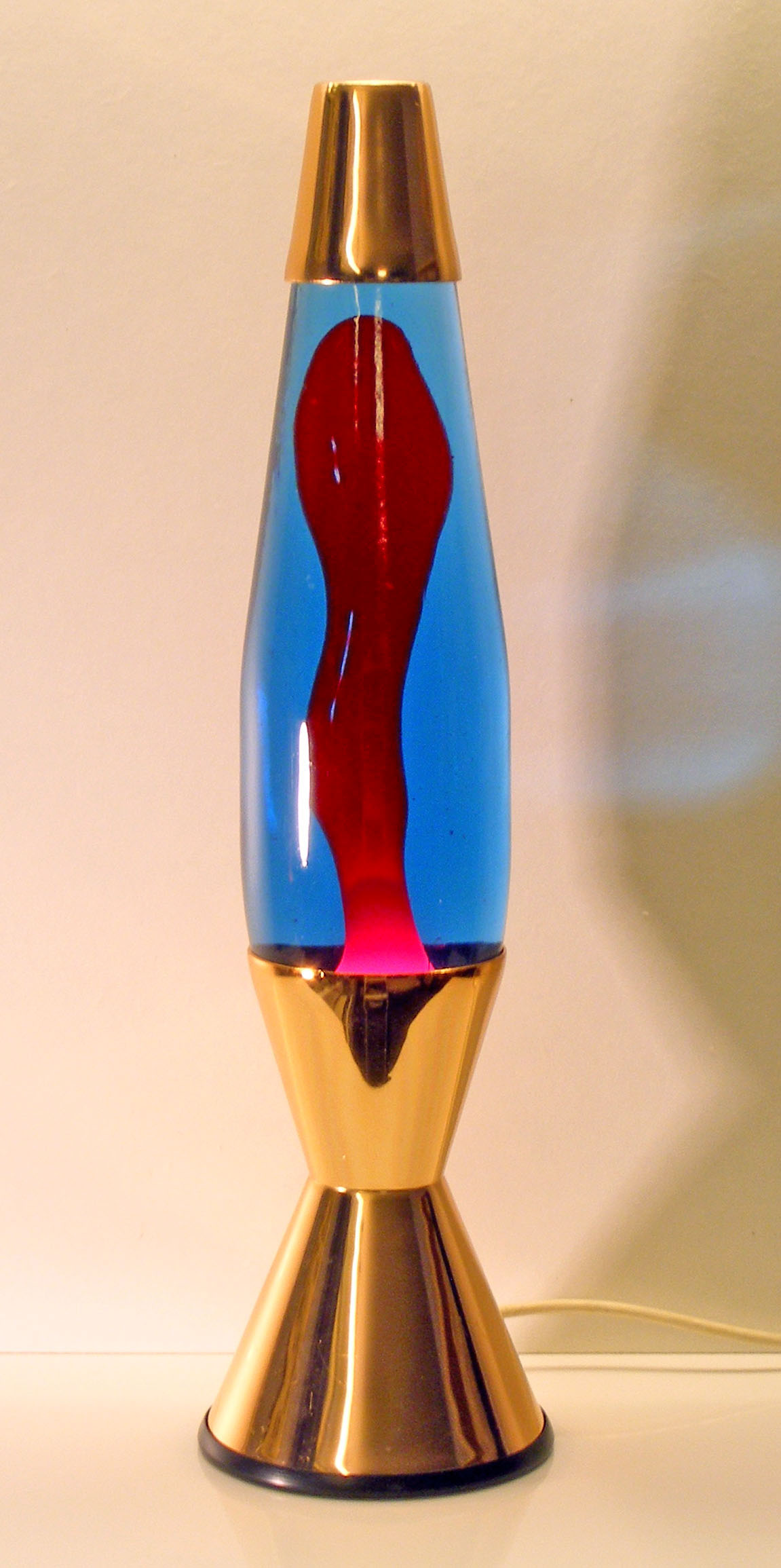
The Astro Mini series came out in 1964 right after the Astro. Like the Astro, it was designed by Edward Craven Walker also went through several iterations. It was rebranded as the Astrobaby in 1992.
Astro Mini MK1 1964:
The first Astro Mini has an open base design, featuring a brass bulb holder and a switch identical to Astro MK1.
Astro Mini MK2 1964-65:
Maintaining the open base, the MK2 introduced a bakelite bulb holder, pre-1966/67 flex wire code, and an additional black rubber trim on the base. The switch adopted a push in/out click mechanism.
Astro Mini MK3 1969:
A significant change in design, the MK3 featured a black bakelite base plate, taller bases than MK1-2, and a metal bulb puller inside for bulb removal. The cord and switch mirrored those of Astro MK5.

This picture showcases both versions of the early Astro mini design compared to the MK3 with the MK3 being on the right.


Scandinavian Variant:


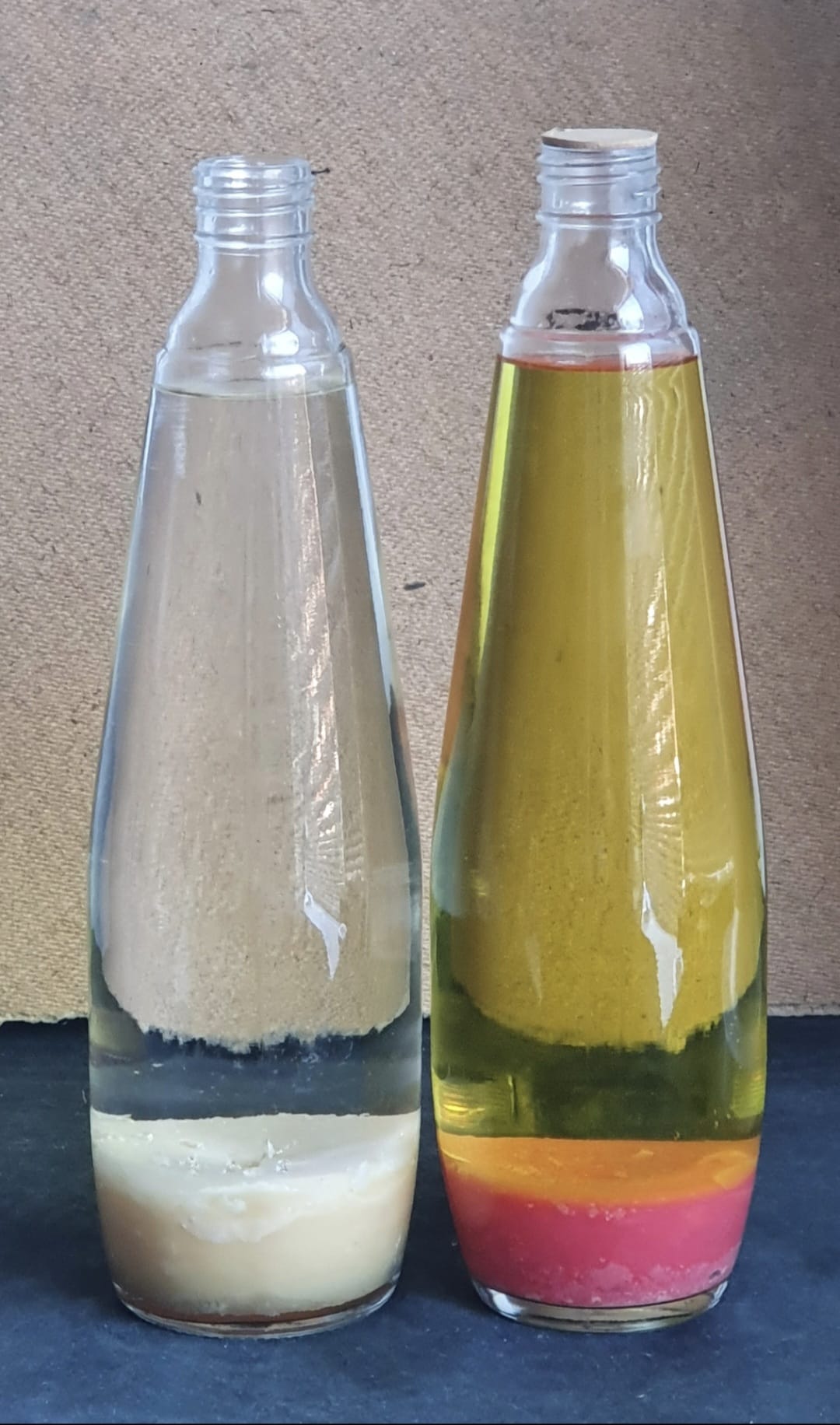
A variant of the Astro Mini appeared in Scandinavia. It is the only one known of its kind. It features a wooden base and a metal base with similar construction to an Astro Mini, but includes an accented lip for the bottle to sit in.
Lava Lite Inspiration:
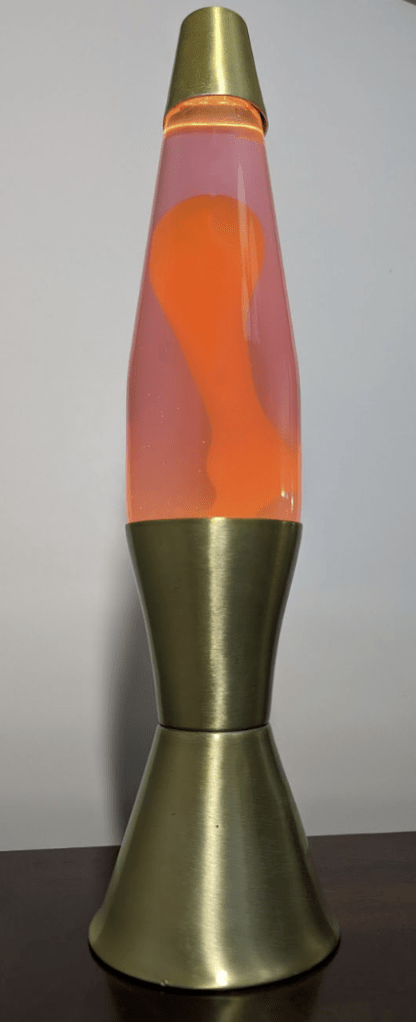
In the United States Lava Lite based the first Enchantress model on the Astro Mini. It featured the same bottle and plastic cap. The metal topper is brushed aluminum with a brass shellac. The base is not a seamless 1 piece design, but two pieces spun on a lathe and fused together in the middle. The Enchantress design eventually shifted to the more modern design to distinguish it from the Astro Mini.
Phantom Lite
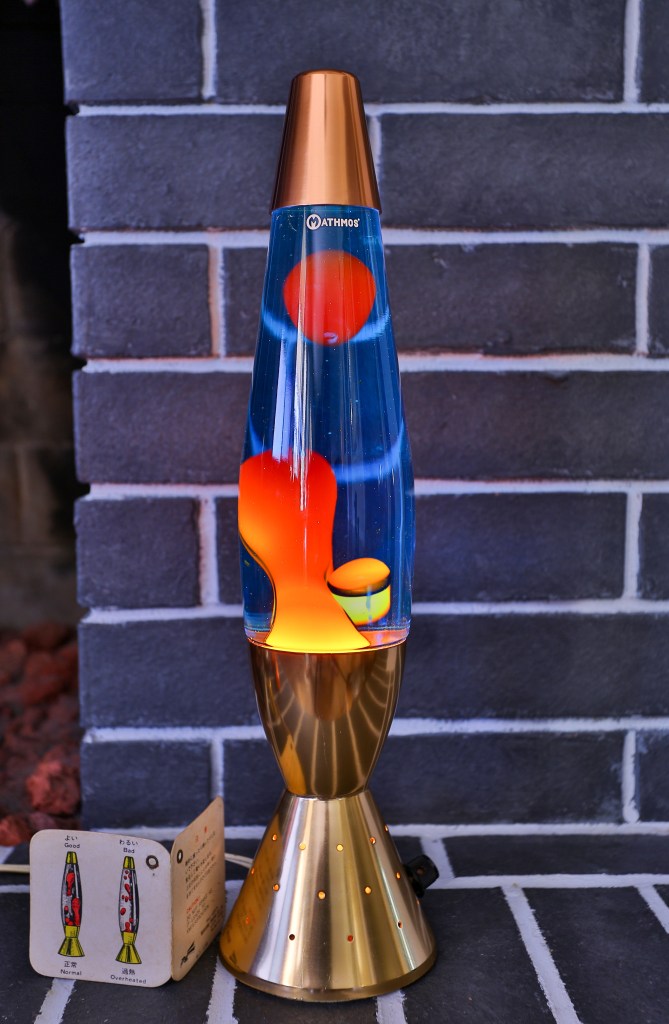
The Phantom Lite was a lamp sold by the Murakami Trading Co. LTD in Japan after securing rights to make lava lamps from Crestworth. Some of these made it to the USA through military personnel who were stations in Asia that brought them home as souvenirs. It features a similar Astro Mini design but includes a build in dimmer switch and pinholes to let light through. It resembles a mash-up between the Lava Lite Century and the Astro Mini! The globe is unique in that it screws into a threaded ring added to the top of the base.

D. G. Lockwood


D. G. Lockwood was another company that produced lava lamps after being given the rights for their Country. These were sold in Australia and came in two models, an Astro Mini and a Telstar. They resemble the same lamps made in the UK, but feature a push switch on the front of the base.
Lantern
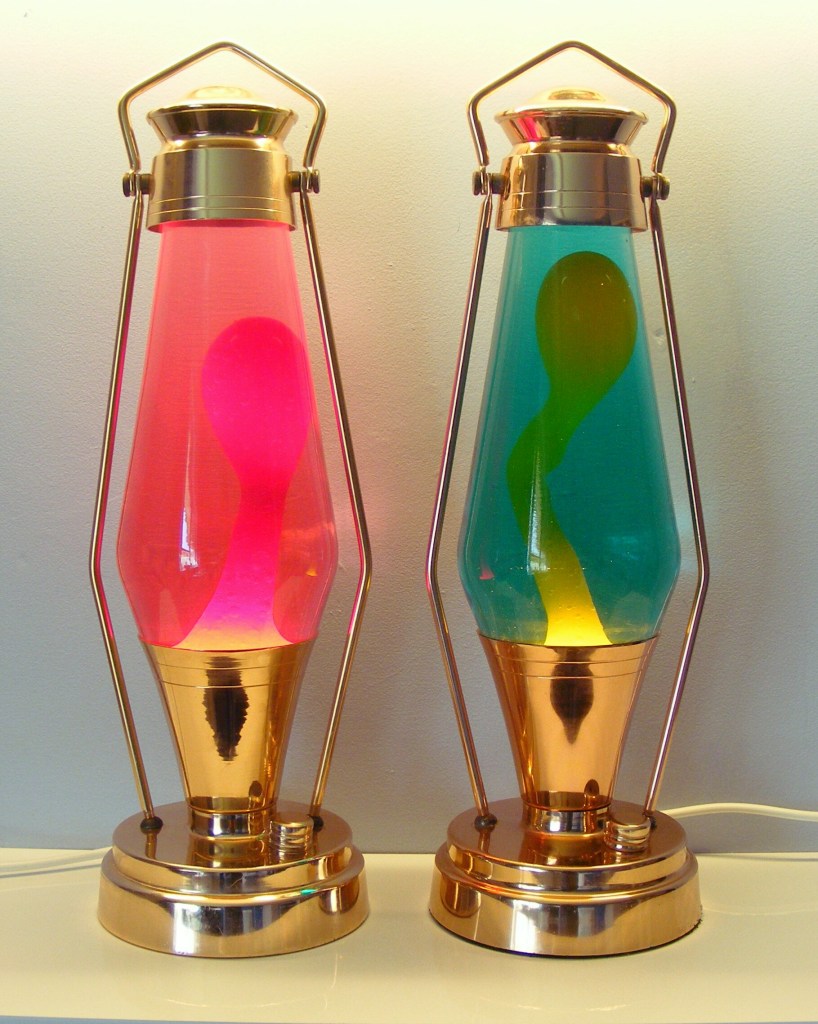
Astro Lantern MK1 was released approximately in 1965 or 1966 with two variations.
The first variant features a black bakelite bulb holder. The handle, cap and both lamp stays held via flat head screws and loose nuts inside cap, both stays slide through the base of the lamp and a series of large washers and nut attached to both. Both stays move up and down and not fixed like later versions. The bottle is the wider neck type as used in Astro MK2-3
The Astro Lantern MK 2 features white plastic cable grip, flex is the brown/blue/green-yellow colour coding indicating it came out around 1969. The handle and stays are now held via flat ended head screw that runs through a hole in the stays. The cap has a nut fixing attached thus making it more study. Both stays now screw into the base.
The Astro Lantern came with two bottle colors one with ruby red wax and rose master fluid and the other with topaz wax and blue-green master fluid indicating port and starboard respectively.
Nordic Cosmos
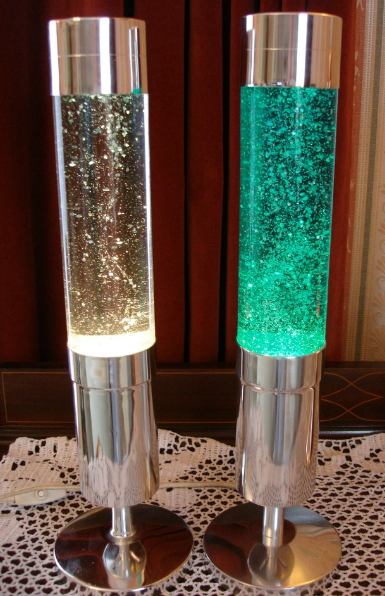


The Astro Nordic was the first Crestworth lamp to use the straight walled cylinder bottle. The bottle holder sits on either a flat pedestal base. This design was later used in many other models like the Jet, Telstar, and others. The Nordic Cosmos comes only in polished silver. This design was available in the UK and surrounding areas, but it was very popular in the rest of Europe, particularly in France.
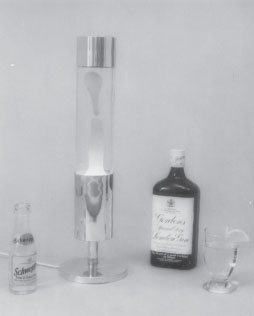
The very first Mk1 Nordics didn’t have a lip to hold the bottle or a ridge in the cap. They relied on a friction fit to hold the bottle in place. Later a lip was added since it proved to be a more reliable way to hold the bottle. This can be seen in the picture above. Note the straight tubes for the base and cap.
Sometimes the spacing between the lip and the light bulb was too short. If your bottle wobbles within the base, the culprit might be your bulb! Consider swapping the clear bulb for a slightly shorter pearl bulb.
Earlier models leaned towards a flatter lip atop the cylinder base, while later versions adopted a more curved profile. The oldest version featured a main cylinder, a separate middle section (stem), and a final base section, addressing the prior wiring difficulty.
Nordic / Glitterlite

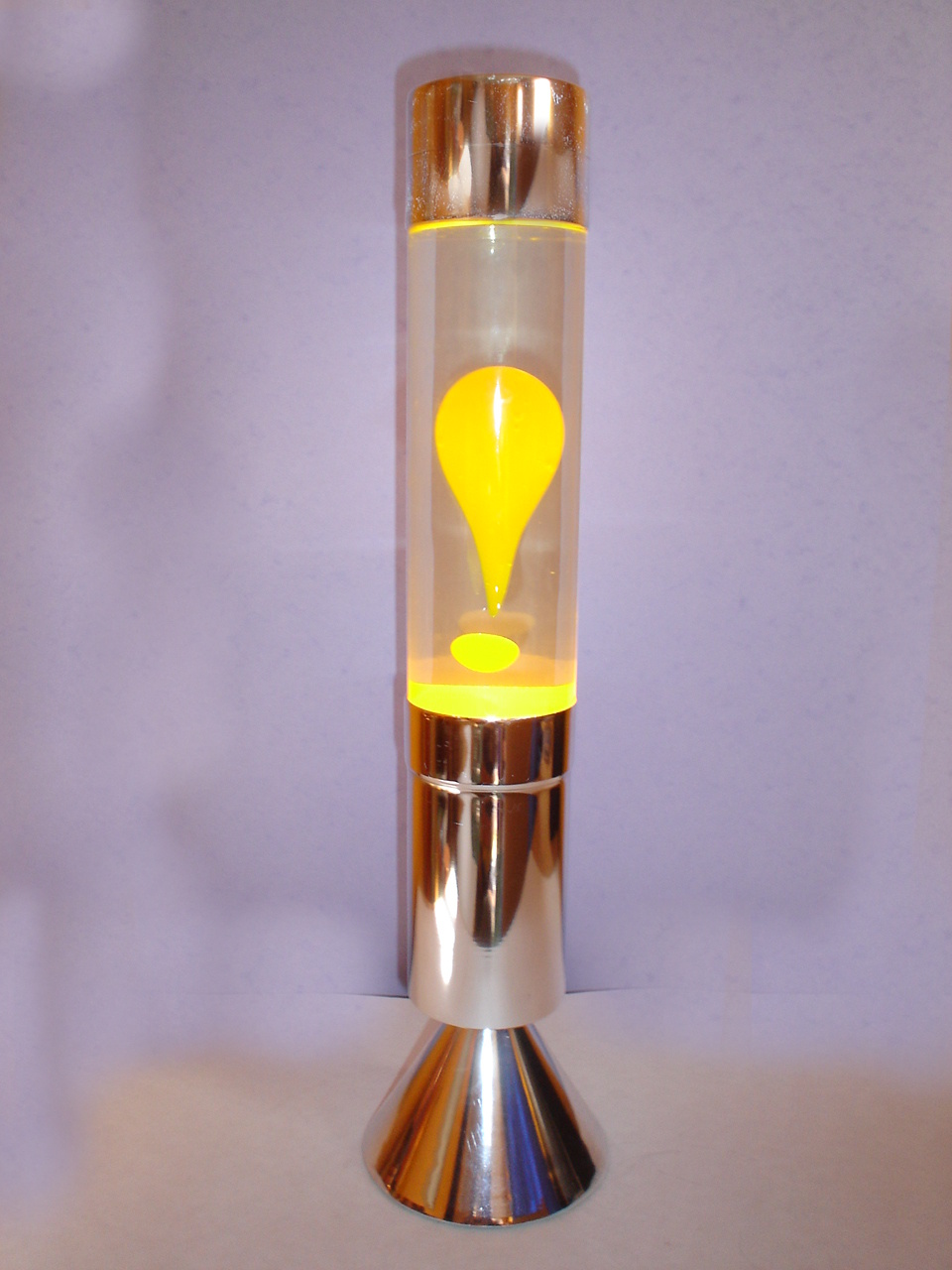
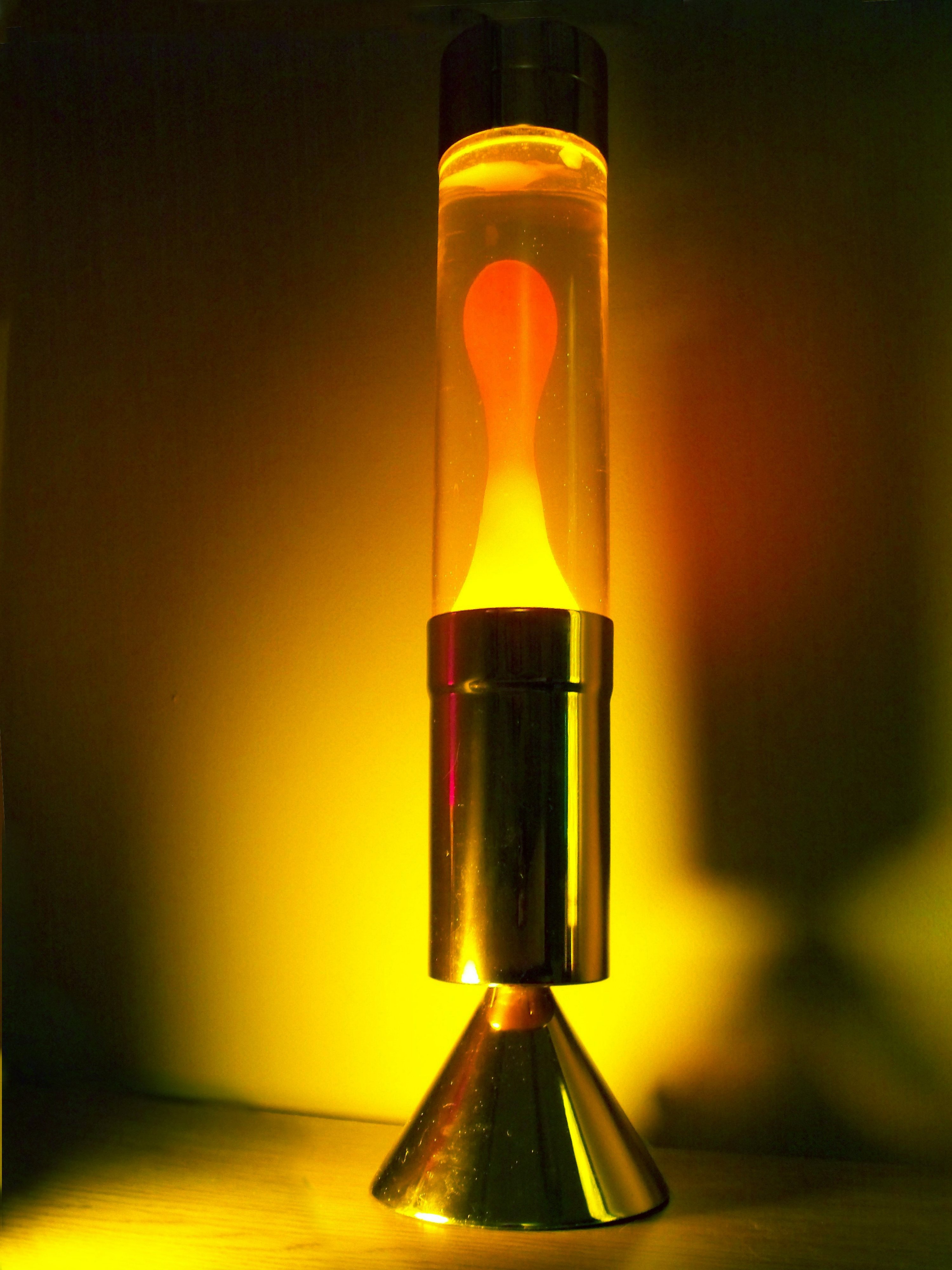

The Nordic with the cone shaped was the second lamp in the Nordic series. It featured a tapered cone similar to the bottom of an Astro or Astro mini. It was sold simultaneously alongside with the earlier Cosmos model.
While this model remained largely unchanged throughout its production, aside from the bottom stand, some subtle differences are noticeable. Some caps displayed a faint indentation line, while others had a deeper, more noticeable one. Green felt on the base plate characterized earlier models, while blue felt became the norm later.
Glitterlite
The Glitterlite is a Nordic with a glitter fill, but it was marketed separately. Other models came with glitter fill, but they are glitter fills for their respective model and weren’t considered their own model. Maybe this was because the Glitterlite was a new idea, but it was popular enough that the glitter filled bottles were offered with other lamp designs? For the simplicity of keeping things organized on thie site the Glitterlite is classified under the Nordic.

The Glitterlite appearance is unlike many other glitter fills in that it has small flakes that move slowly. It is one of the first glitter lamp formulas ever made. Glitterlites differ from Living Jewels in that the Living Jewel use a solvent based glitter formula that moves much faster and the Glitterlite use a more oily formula that moves slowly.
Princess

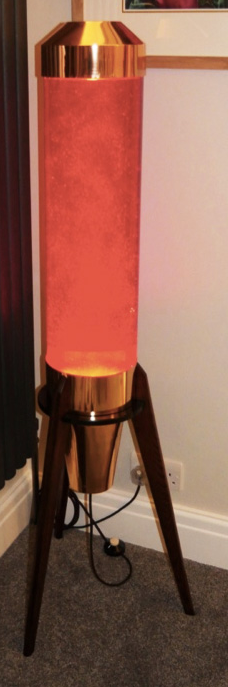


The Princess is one of the rarest lava lamps ever and is sought after by elite collectors! It is unknown how many exist and little is known about the Princess. Mathmos has one in their headquarters, but it is rumored that the bottle was broken during a light bulb exchange. It was sometimes shown at tradeshows and Mathmos exhibits. These lamps were never sold to the public as they were promotional items intended to help sell Astro Lamps. They moved from store to store as a display item to pique passersby’s interest in hopes of generating an Astro sale. The Princess had an always liquid wax that were filled and drained many times as they had to be emptied for ease of transport to a new display location. The biggest downside to this fill used is longevity (it’s fairly short-lived). It is also easy to shake up causing the lamp to become cloudy. One upside though, is that this formula could start flowing very quickly which is very important for use as store displays.
The Princess was featured in Doctor Who “Wheel in Space”
The earliest known date that these were likely produced is 1968 as featured in Dr Who’s “The Wheel in Space” serial, and 2 bottles looking similar in size can be seen in the show The Prisoner filmed in 1967.
The Princess was made to showcase the Crestworth formula and the formula used in them featured an always liquid “wax”, even when cold. This kind of liquid-only wax was mentioned in some of the earlier 1965 patents and was short-lived after it was replaced with a wax that actually hardens when cool. 1968 is also around the same time the Imperial was available in the US. The Imperial is of similar design and construction to the Princess.
Telstar
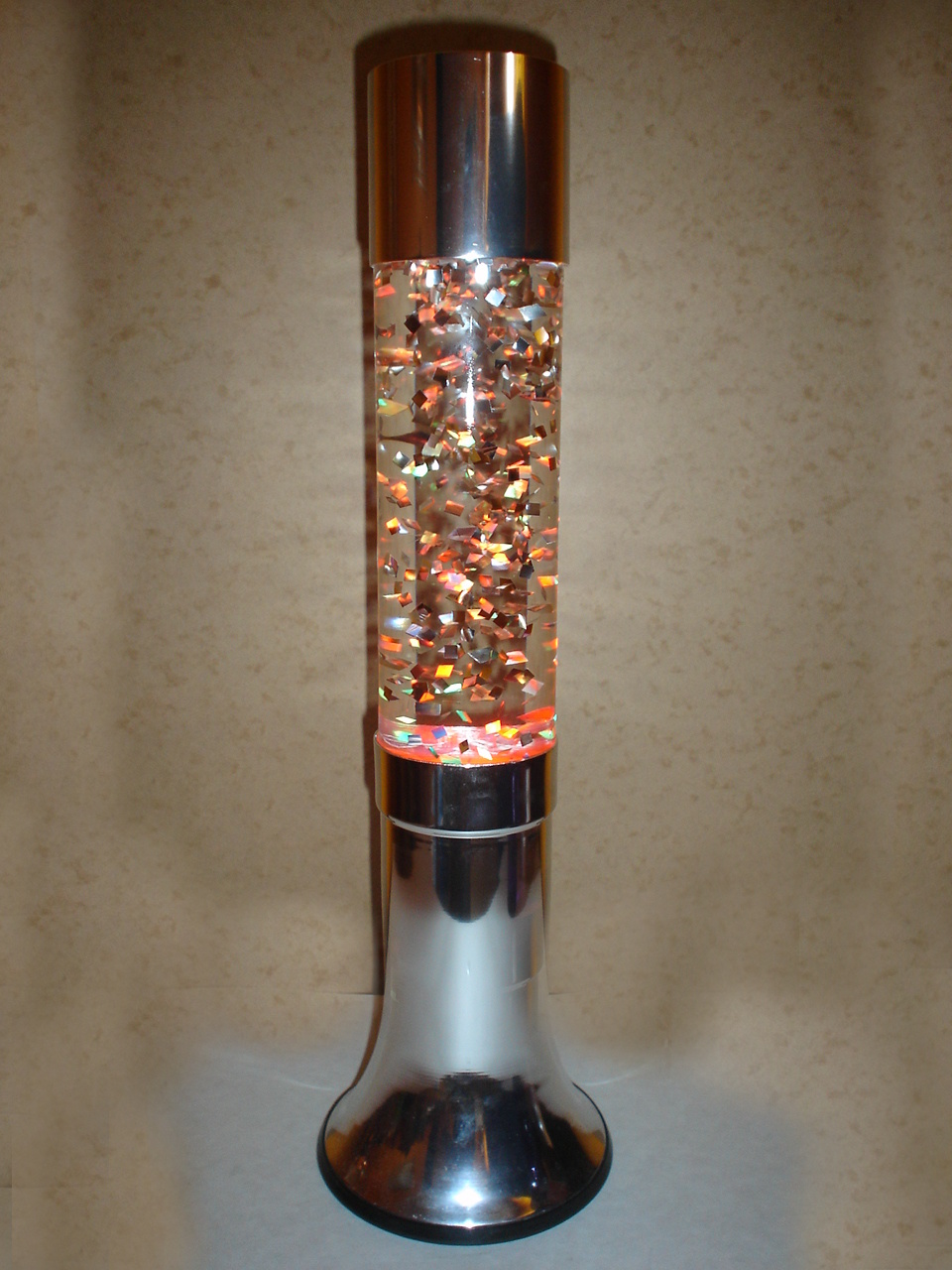
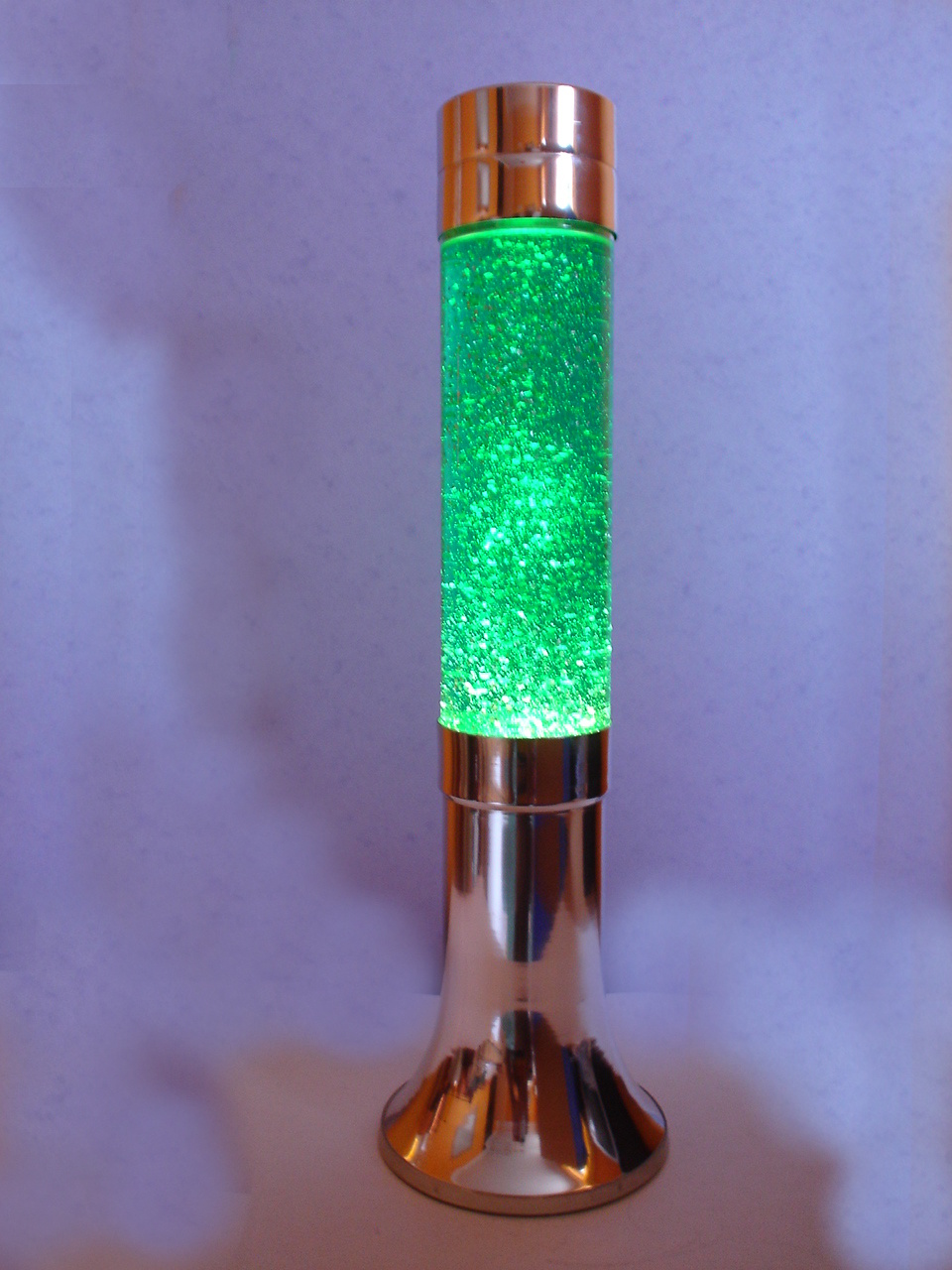

One of the earliest sightings of the Telstar is in a 1976 Argos catalog which featured the MK3 version. The original Telstar was released in copper and consisted of two parts, with the bulb and bulb holder sitting in an egg cup shaped insert which also supported the bottle, and the base was open like the early Astro and Astro Mini designs. In the Telstar MK2, the two-part base featured a base plate, but it still had an insert for the bottle. The bulb holder was now held via the base plate.
The Telstar was came in lava, glitterlite, and living jewel fills.
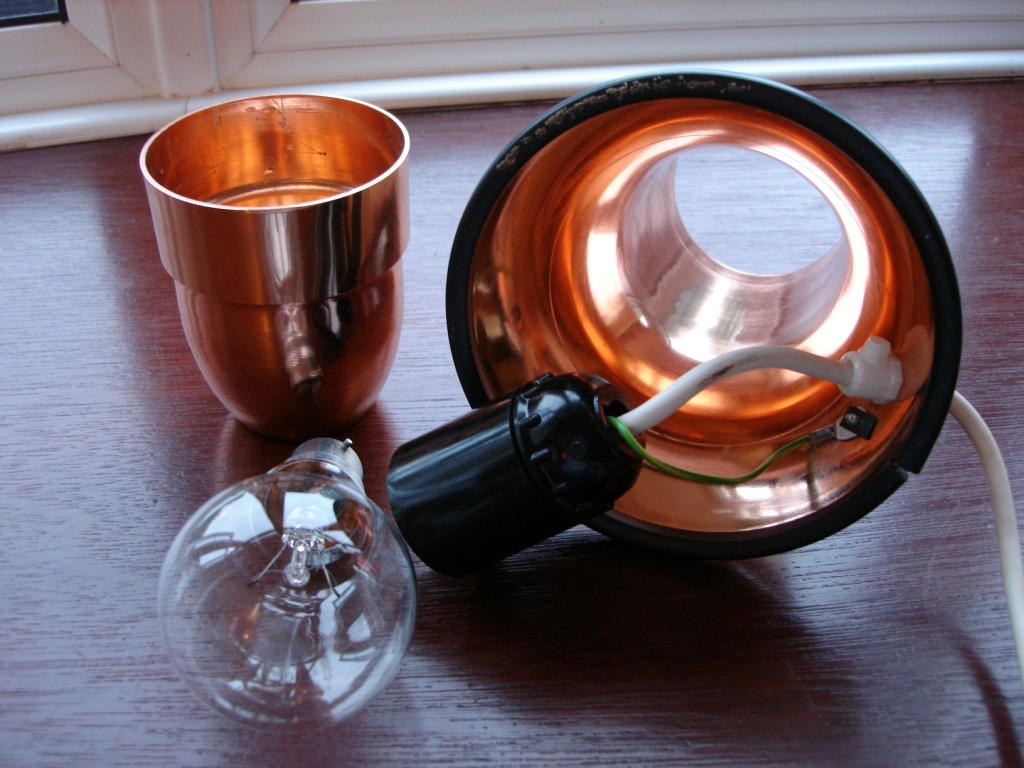
Moving to the Telstar MK3 in the mid-70s, it featured a one-part base and was available in copper and silver finishes. Like the MK1 versions, these Telstars used a standard bayonet bulb and were released as a more affordable option. Silver versions tended to have black flex and black rubbery trim around the base, while copper versions used white flex. Most weren’t fitted with a switch, again to keep costs down. Later versions incorporated the “Living Jewel” glitter and featured a larger designed top. These were likely used as the inspiration for the knock-off Chinese Oozy Glo lamps.

Nordic De luxe / Living Jewel
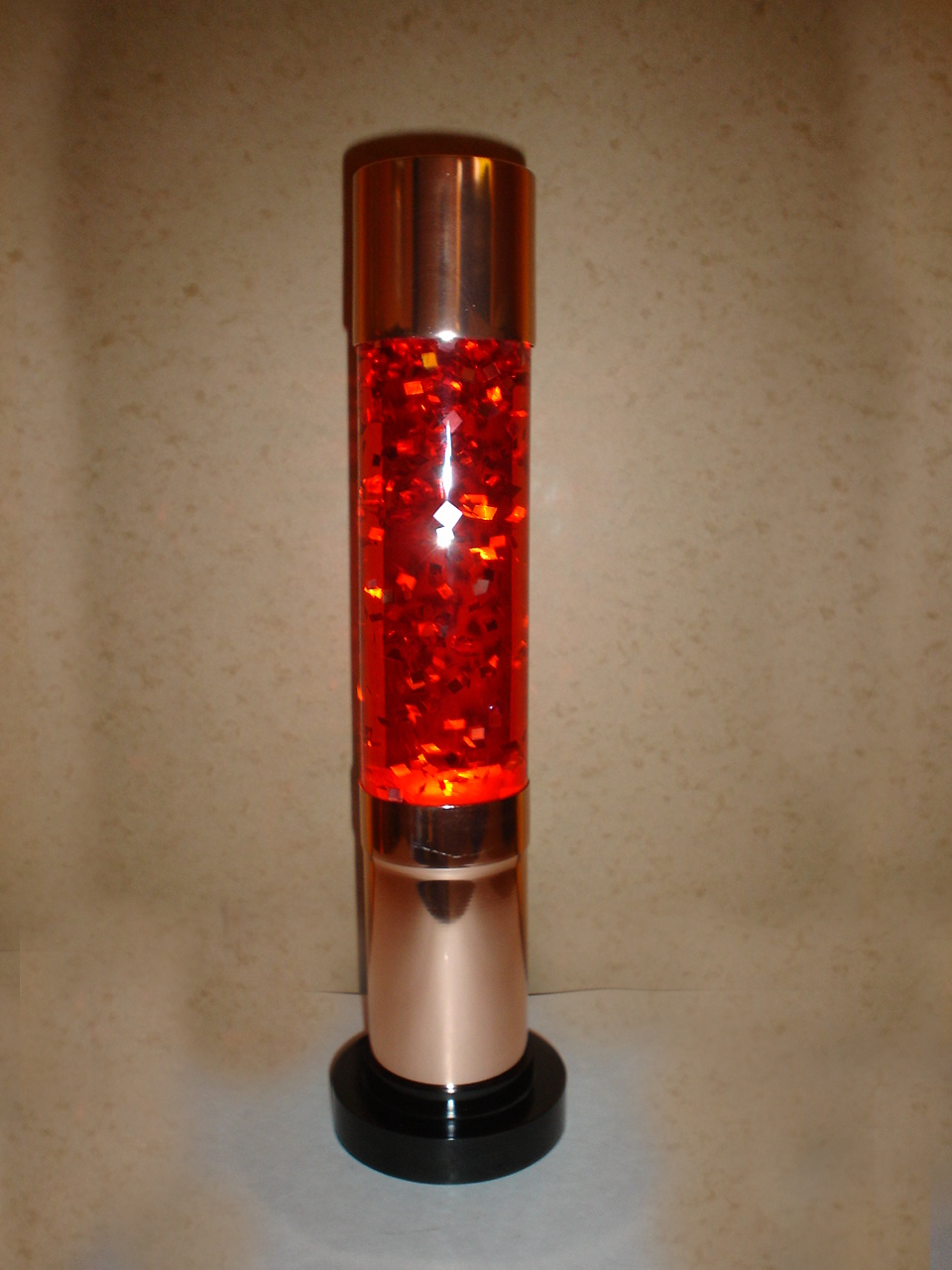


The Nordic Delux are the precursor to the Jet, and is characterized by its 1960s-style Nordic cap and black bottom pedestal base. Despite having the same design the Living Jewel is the glitter variant and the Nordic Delux is the lava variant. What distinguishes this model from the Astro Nordic is the bottom. The earlier Nordic model has a cone shaped base and these have the flat bottom base.
While most commonly found with the standard jet-sized cap, some early prototypes exist with a shorter base and no Crestworth diamond on the base plate. It’s important to note that the Living Jewel should only use a 25-watt bulb max, as overheating can cause the silver squares to lose their metallic coating.
Living Jewel
Like the Glitterlite the Living Jewel was also originally sold as a stand alone model and it was offered as fills for other models. The Living Jewel fill differs from the Glitterlite. It uses a solvent based liquid that allows the glitter to move much more quickly and it shines brighter. One downside to this formula is that it is prone to evaporation and is considerable more dangerous to be exposed to. If the contents of the Living Jewel finds its way outside of the bottle take great care to ventilate the area and quickly clean up the spill because it will quickly eat away anything it can dissolve!
An optional sleeve as shown in the picture below could be purchased which was a self-adhesive leatherette sleeve that could be placed on the bottle for added flair.


Silver Living Jewel with sleeve.
Nordic Table Lamp

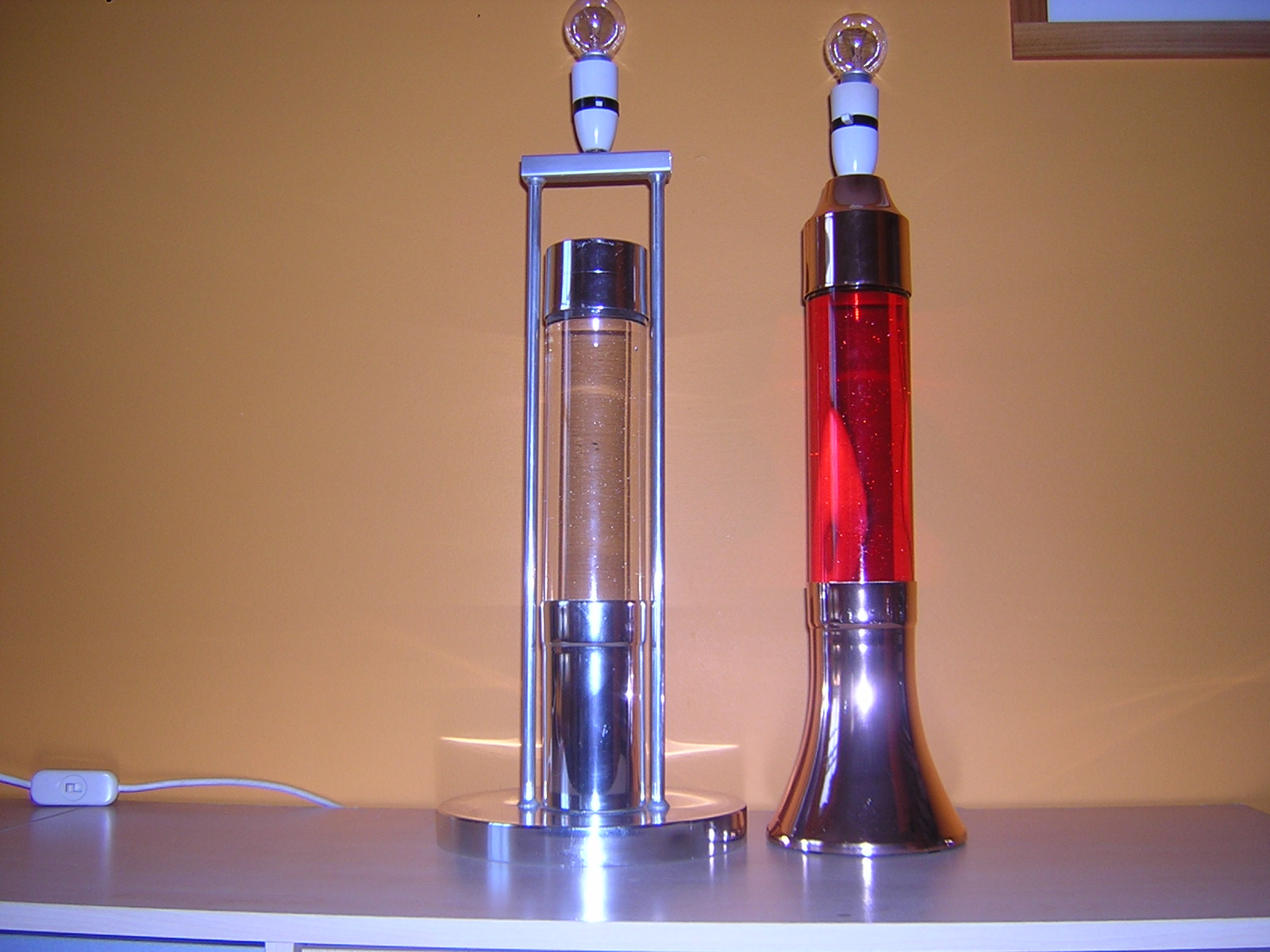


The Nordic Table Lamp came in two varieties with the first being similar to a Telstar lamp, but with a wider flare and a distinct 70s base plate. The second model is similar to a Nordic Deluxe lamp and is considered the rarer of the two models. They both feature multiple switches to allow for operation of the table lamp and the lava/glitter lamp, or both simultaneously.
Nordic Sconce


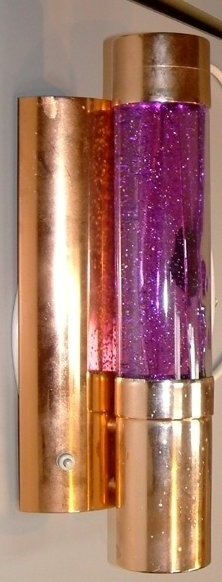
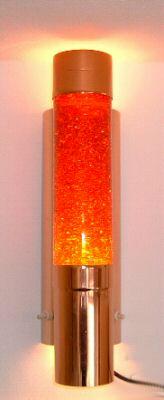
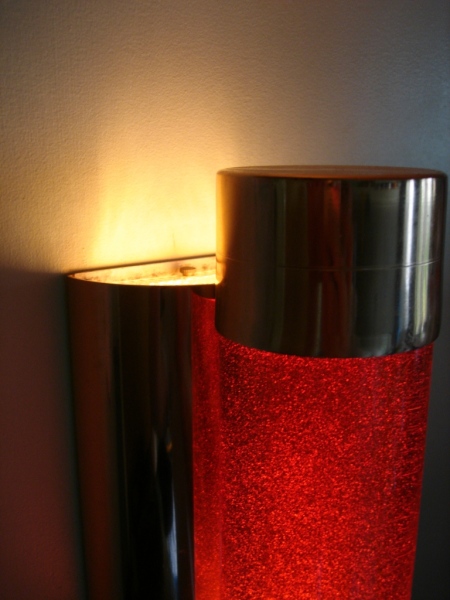
The Nordic Scones was available in both lava and glitter versions. They are noticeably rarer than other lamps of this era. Made with either a silver or copper finish with silver being the rarest, it features two backlight bulbs offering two lighting options: illuminated bottle only or bottle with backlight.

Traction Lamp

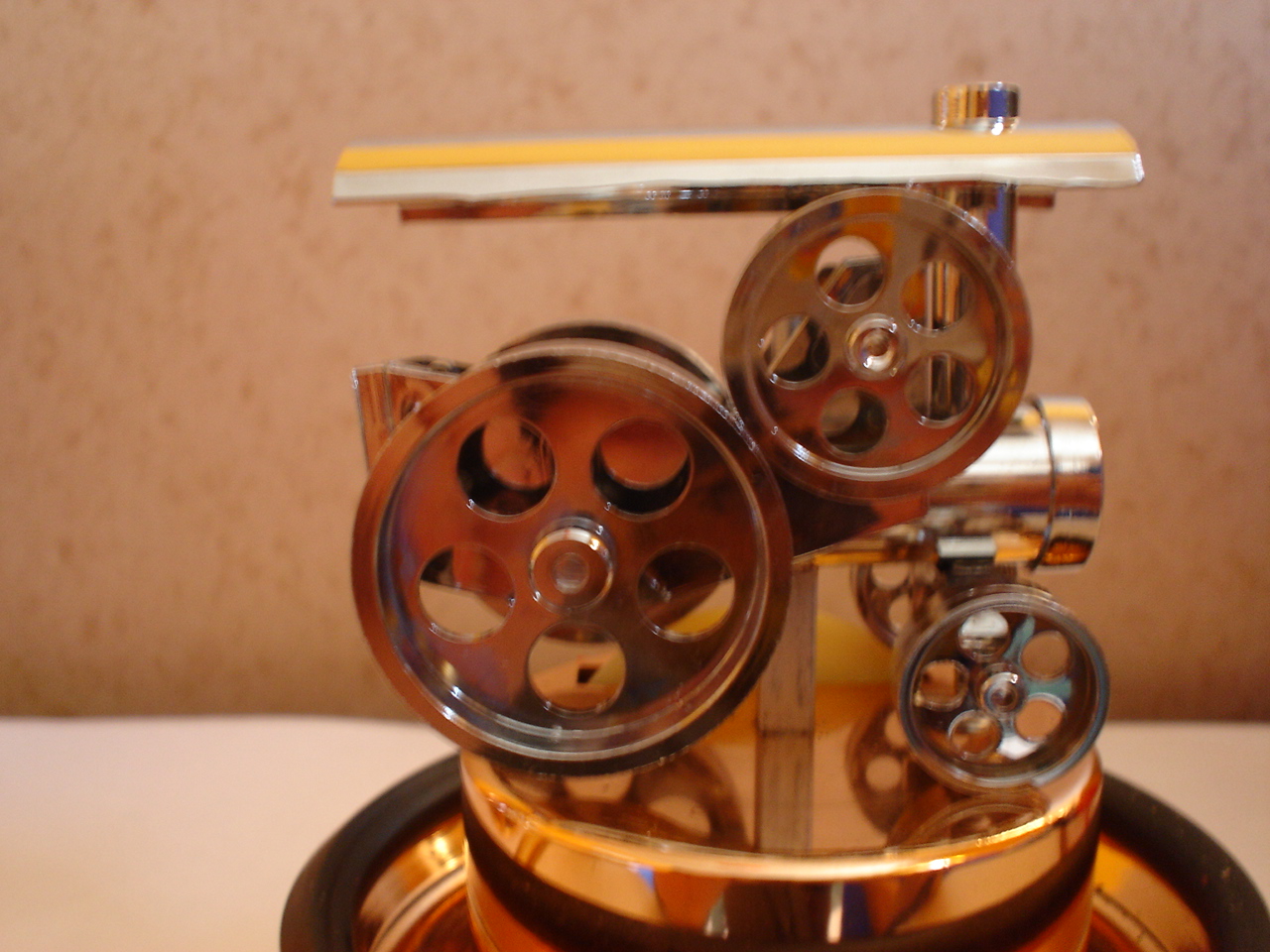
The Traction Lamp, unlike lava lamps, doesn’t rely on fluid movement. The upper portion bears a resemblance to a lantern, adding a touch of vintage charm. Both versions utilize the same base as the Crystalite Fibre Optic and Aromalite lamps and come with a light bulb in the cap.
The Traction Lamp is designed after Traction Engines which are steam powered tractors.
The Traction Lamp comes in two versions.
MK1 features a steam engine with a metallic brushed finish. MK2 is made with shiny plastic and turns much slower In contrast to its predecessor.

 The Lava Library